Pride in Place Programme Chair
Share Pride in Place Programme Chair on Facebook Share Pride in Place Programme Chair on Twitter Share Pride in Place Programme Chair on Linkedin Email Pride in Place Programme Chair link

What is the Pride in Place programme?

The Pride in Place Programme is a new government funding programme, aiming to put power into the hands of local people in some of the most in-need neighbourhoods in the UK, so that they can decide how to regenerate their local area. It gives communities control of £20m over the next 10 years, to be spent on projects that will make a real difference to the neighbourhoods they live in. The programme is:

  • Long-term: providing certainty and security of funding over 10 years.
  • Flexible: allowing communities to spend their funding on the projects that matter most to them, in a way that works for them.
  • Community-led: putting local people at the heart of decision-making, with residents having their say on the future of their neighbourhood.
  • Supportive: empowering people to build the skills and confidence they need to deliver change in their communities

The guiding principle is that the long-term funding is intended to support communities in shaping their place, and prioritising funding, based on extensive community engagement around three core goals:

  • Building stronger communities
  • Creating thriving places
  • Empowering people to take back control

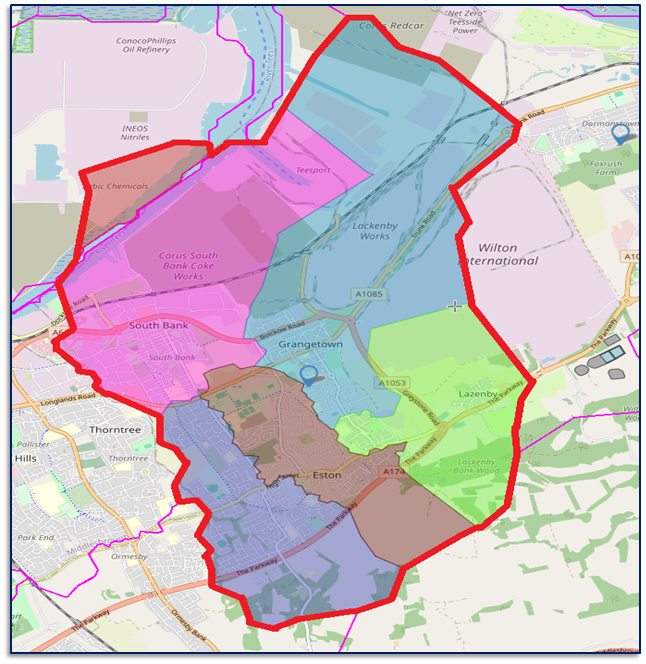
In Redcar and Cleveland, the Eston area covering the wards of Eston, South Bank, Normanby, Teesville, Grangetown, and Lazenby, has been selected for inclusion in the programme and will receive £2 million annually over the next 10 years The map below shows the area that has been awarded funding.

Why are Independent Chairs leading the Pride in Place Neighbourhood Boards?

To deliver the Pride in Place Programme, Pride in Place Neighbourhood Boards have been established and each Board is led by an independent Chair, someone who can bring communities together to share their ideas in an open and collaborative way.

The Chair’s primary job is to be a champion for their place and to embody the community-led spirit of the programme. We actively encourage applications from a wide range of individuals, including community activists, local residents, and people with strong lived experience of TS6. As a community‑led programme, we are committed to ensuring the Chair role is accessible to those who understand the area, care deeply about its future, and can represent the voices and priorities of local people. Professional experience is welcome but not essential, what matters most is a genuine commitment to TS6 and the ability to support the Board in driving positive change.

Following the submission in November 2025 of the 10-year Regeneration Plan and 4-year Investment Plan, which outlines how the Board proposes to use the funding, the Chair will play a key role in ensuring these plans genuinely reflect the needs of the community.

The Independent Chair will act as a proactive, trustworthy convenor who:

  • Is deeply connected to their community and fiercely committed to making it an even better place to live.
  • Can bring together different voices from across their community, to shape a collective vision for the future of their place.
  • Has local credibility and will be respected as a leader – even if this is their first leadership role.
  • Ensures that all voices are heard and that Board discussions are collaborative.
  • Is adept at finding consensus, navigating conflict calmly and impartially, never allowing ego to get in the way of progress.
  • Brings together community groups and prioritises community engagement as a central pillar of the programme.
  • Is clear about their own knowledge gaps and considers how the makeup of the Board complements this.
  • Thinks laterally and creatively about solutions to problems and ways to draw in community voices.
  • Acts as a public face and represents the Board externally, and brings figures of different political stripes together.
  • Provides strategic leadership that ensures Pride in Place Programme (PiPP) projects are aligned with one another, creating a coherent and integrated programme of activity across TS6.
  • Identify and pursue opportunities to embed TS6 projects within wider external initiatives, ensuring alignment with strategic priorities set by partners, stakeholders, and regional or national programmes.
  • Use insight, partnership working, and strategic awareness to position TS6 activity within the broader regeneration landscape, maximising impact and avoiding duplication.

The Chair should not be:

  • A gatekeeper or clique-builder; the Board should have a range of voices, including ones that differ from the Chair’s.
  • Seeking to push personal agendas – this is about what the community wants.
  • The only decision-maker or expert in the room.
  • The day-to-day delivery lead: this is a strategic role.

What skills, knowledge or experience is required for the role?

Skills and attributes of a good Chair:

  • Fair and balanced, ensuring that all voices are heard
  • Good at facilitating conversations, particularly when differences of opinion emerge
  • Open to learning, feedback and development, and an interest in mentoring and upskilling others
  • Welcoming, open and listens deeply to others
  • Calm under pressure and manages conflict well
  • Has time to prioritise the role

What support will the Chair receive to carry out their role?

The Chair of the Neighbourhood Board will receive ongoing support from both Redcar and Cleveland Borough Council as the Accountable Body for the funding, and also the local MP. The Chair will be supported in the process of recruitment of local stakeholders and residents to their Boards, and throughout the process of developing strategic priorities for each area. Secretariat and governance support for the Board will also be provided.

What is the time commitment?

The Chair will be required to attend a number of Board meetings a year plus occasional development or engagement sessions. Some reading of board papers will be required before each meeting, also liaison with Redcar and Cleveland Borough Council regarding programme management processes. In the early stages of the programme, the Chair will need to commit time to liaise with the local MP and the Council to support delivery and ensure the continued establishment and effective operation of the Board.

This is a voluntary role, similar to that of a school governor or charity trustee. However, to ensure that Neighbourhood Boards have the right leadership, and to open the position up to candidates who might otherwise be unable to put themselves forward, a small basic payment may be provided. Should such an arrangement be agreed, full details of the payment should be published online.

What will the Pride in Place Neighbourhood Boards look like?

The Board will bring together residents, local businesses, grassroots campaigners, workplace representatives, faith, and community leaders and those with a deep connection to their area. The local MP and the Leader of the Council must approve the final Board selection, which will include local residents. Neighbourhood Boards must also include the relevant local MP and at least one ward councillor. They should be resident-led, to ensure that they are representative of the communities that they serve. The Boards must ensure there are more residents and people who live or work in the area on the Board than there are elected representatives.

To encourage diverse and inclusive Boards, membership may be drawn from the following groups:

  • Community leaders, organisers and activists, such as local charities, faith groups, community groups, neighbourhood forums, youth groups or social clubs
  • Local businesses and social enterprises, such as key local employers, the local Chamber of Commerce or Business Improvement District, registered social housing providers or Co-operatives
  • Cultural, arts, heritage and sporting organisations, such as local sports clubs or sporting organisations, local heritage groups or local museums and arts spaces
  • Public agencies and anchor institutions, such as local schools, higher education and further education institutions, local health care providers, or relevant representatives from local authorities

This list is non-exhaustive, and membership will depend on the local context.

Where can I find out more about the Pride in Place Programme?

More details and background information can be found on the Government’s website: Pride In Place Programme Prospectus

How do I apply for the role?

If you think that this role might be for you, we are asking applicants to submit a CV and supporting statement, up to 500 words, outlining:

  • Why you are interested in this role; and
  • Why you would be a great fit for the role.

Send your Expression of Interest by email to estontowndeal@redcar-cleveland.gov.uk no later than noon on Monday 20 April 2026.

If you would like an informal discussion about the role, please contact estontowndeal@redcar-cleveland.gov.uk

Interviews will be held Thursday 30th April 2026

Confidentiality

The information you supply will only be used to help with the shortlisting and selection process for the Pride in Place Programme.

By completing and submitting an expression of interest form, you consent to Redcar and Cleveland Borough Council processing such personal data as may be necessary for the administration of the selection processes or meeting our obligations with the grant funding associated with the Pride in Place programme.

The information you supply will not be used in any other way and will be processed in accordance with your rights under the Data Protection Act 2018.

What is the Pride in Place programme?

The Pride in Place Programme is a new government funding programme, aiming to put power into the hands of local people in some of the most in-need neighbourhoods in the UK, so that they can decide how to regenerate their local area. It gives communities control of £20m over the next 10 years, to be spent on projects that will make a real difference to the neighbourhoods they live in. The programme is:

  • Long-term: providing certainty and security of funding over 10 years.
  • Flexible: allowing communities to spend their funding on the projects that matter most to them, in a way that works for them.
  • Community-led: putting local people at the heart of decision-making, with residents having their say on the future of their neighbourhood.
  • Supportive: empowering people to build the skills and confidence they need to deliver change in their communities

The guiding principle is that the long-term funding is intended to support communities in shaping their place, and prioritising funding, based on extensive community engagement around three core goals:

  • Building stronger communities
  • Creating thriving places
  • Empowering people to take back control

In Redcar and Cleveland, the Eston area covering the wards of Eston, South Bank, Normanby, Teesville, Grangetown, and Lazenby, has been selected for inclusion in the programme and will receive £2 million annually over the next 10 years The map below shows the area that has been awarded funding.

Why are Independent Chairs leading the Pride in Place Neighbourhood Boards?

To deliver the Pride in Place Programme, Pride in Place Neighbourhood Boards have been established and each Board is led by an independent Chair, someone who can bring communities together to share their ideas in an open and collaborative way.

The Chair’s primary job is to be a champion for their place and to embody the community-led spirit of the programme. We actively encourage applications from a wide range of individuals, including community activists, local residents, and people with strong lived experience of TS6. As a community‑led programme, we are committed to ensuring the Chair role is accessible to those who understand the area, care deeply about its future, and can represent the voices and priorities of local people. Professional experience is welcome but not essential, what matters most is a genuine commitment to TS6 and the ability to support the Board in driving positive change.

Following the submission in November 2025 of the 10-year Regeneration Plan and 4-year Investment Plan, which outlines how the Board proposes to use the funding, the Chair will play a key role in ensuring these plans genuinely reflect the needs of the community.

The Independent Chair will act as a proactive, trustworthy convenor who:

  • Is deeply connected to their community and fiercely committed to making it an even better place to live.
  • Can bring together different voices from across their community, to shape a collective vision for the future of their place.
  • Has local credibility and will be respected as a leader – even if this is their first leadership role.
  • Ensures that all voices are heard and that Board discussions are collaborative.
  • Is adept at finding consensus, navigating conflict calmly and impartially, never allowing ego to get in the way of progress.
  • Brings together community groups and prioritises community engagement as a central pillar of the programme.
  • Is clear about their own knowledge gaps and considers how the makeup of the Board complements this.
  • Thinks laterally and creatively about solutions to problems and ways to draw in community voices.
  • Acts as a public face and represents the Board externally, and brings figures of different political stripes together.
  • Provides strategic leadership that ensures Pride in Place Programme (PiPP) projects are aligned with one another, creating a coherent and integrated programme of activity across TS6.
  • Identify and pursue opportunities to embed TS6 projects within wider external initiatives, ensuring alignment with strategic priorities set by partners, stakeholders, and regional or national programmes.
  • Use insight, partnership working, and strategic awareness to position TS6 activity within the broader regeneration landscape, maximising impact and avoiding duplication.

The Chair should not be:

  • A gatekeeper or clique-builder; the Board should have a range of voices, including ones that differ from the Chair’s.
  • Seeking to push personal agendas – this is about what the community wants.
  • The only decision-maker or expert in the room.
  • The day-to-day delivery lead: this is a strategic role.

What skills, knowledge or experience is required for the role?

Skills and attributes of a good Chair:

  • Fair and balanced, ensuring that all voices are heard
  • Good at facilitating conversations, particularly when differences of opinion emerge
  • Open to learning, feedback and development, and an interest in mentoring and upskilling others
  • Welcoming, open and listens deeply to others
  • Calm under pressure and manages conflict well
  • Has time to prioritise the role

What support will the Chair receive to carry out their role?

The Chair of the Neighbourhood Board will receive ongoing support from both Redcar and Cleveland Borough Council as the Accountable Body for the funding, and also the local MP. The Chair will be supported in the process of recruitment of local stakeholders and residents to their Boards, and throughout the process of developing strategic priorities for each area. Secretariat and governance support for the Board will also be provided.

What is the time commitment?

The Chair will be required to attend a number of Board meetings a year plus occasional development or engagement sessions. Some reading of board papers will be required before each meeting, also liaison with Redcar and Cleveland Borough Council regarding programme management processes. In the early stages of the programme, the Chair will need to commit time to liaise with the local MP and the Council to support delivery and ensure the continued establishment and effective operation of the Board.

This is a voluntary role, similar to that of a school governor or charity trustee. However, to ensure that Neighbourhood Boards have the right leadership, and to open the position up to candidates who might otherwise be unable to put themselves forward, a small basic payment may be provided. Should such an arrangement be agreed, full details of the payment should be published online.

What will the Pride in Place Neighbourhood Boards look like?

The Board will bring together residents, local businesses, grassroots campaigners, workplace representatives, faith, and community leaders and those with a deep connection to their area. The local MP and the Leader of the Council must approve the final Board selection, which will include local residents. Neighbourhood Boards must also include the relevant local MP and at least one ward councillor. They should be resident-led, to ensure that they are representative of the communities that they serve. The Boards must ensure there are more residents and people who live or work in the area on the Board than there are elected representatives.

To encourage diverse and inclusive Boards, membership may be drawn from the following groups:

  • Community leaders, organisers and activists, such as local charities, faith groups, community groups, neighbourhood forums, youth groups or social clubs
  • Local businesses and social enterprises, such as key local employers, the local Chamber of Commerce or Business Improvement District, registered social housing providers or Co-operatives
  • Cultural, arts, heritage and sporting organisations, such as local sports clubs or sporting organisations, local heritage groups or local museums and arts spaces
  • Public agencies and anchor institutions, such as local schools, higher education and further education institutions, local health care providers, or relevant representatives from local authorities

This list is non-exhaustive, and membership will depend on the local context.

Where can I find out more about the Pride in Place Programme?

More details and background information can be found on the Government’s website: Pride In Place Programme Prospectus

How do I apply for the role?

If you think that this role might be for you, we are asking applicants to submit a CV and supporting statement, up to 500 words, outlining:

  • Why you are interested in this role; and
  • Why you would be a great fit for the role.

Send your Expression of Interest by email to estontowndeal@redcar-cleveland.gov.uk no later than noon on Monday 20 April 2026.

If you would like an informal discussion about the role, please contact estontowndeal@redcar-cleveland.gov.uk

Interviews will be held Thursday 30th April 2026

Confidentiality

The information you supply will only be used to help with the shortlisting and selection process for the Pride in Place Programme.

By completing and submitting an expression of interest form, you consent to Redcar and Cleveland Borough Council processing such personal data as may be necessary for the administration of the selection processes or meeting our obligations with the grant funding associated with the Pride in Place programme.

The information you supply will not be used in any other way and will be processed in accordance with your rights under the Data Protection Act 2018.

Page published: 23 Mar 2026, 02:28 PM